

Most perfumes die
at the arithmetic.
A spark arrives — a word, a room, a memory. Between it and 10 g in a bottle sit dilution factors, IFRA category ceilings, stock-versus-neat conversions and a running total that changes every time you move one number.
Scentigram carries that whole stretch. Your shelf, your formulas and your bench live in one place, and every calculation between them happens where you don't have to look at it.
A spark. Half a second long. Someone says “wet stone after rain” and you want to smell it before the sentence ends.
An idea. Still shapeless — a direction, a season, a weight. Nothing you could put on a scale yet.
A thought. Structure appears: a top, a heart, a base — and four bottles you already own that might carry it.
An image. Percentages, ceilings, milligrams to weigh. The formula you can finally look at instead of imagine.
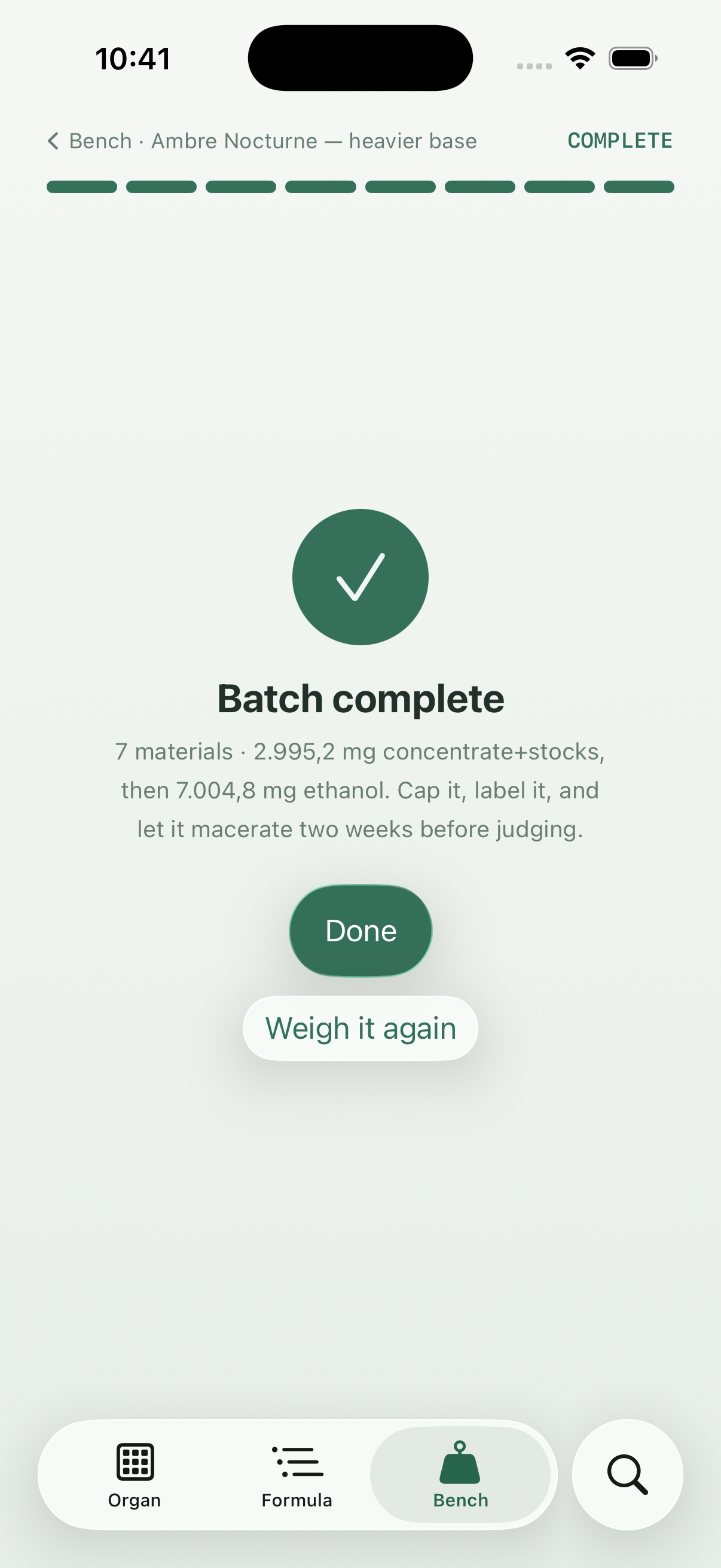
Tangible. 7 materials, 2 995,2 mg of concentrate, 7 004,8 mg of ethanol. Capped, labelled, two weeks to macerate.
Every bottle you own, in the order a formula uses them
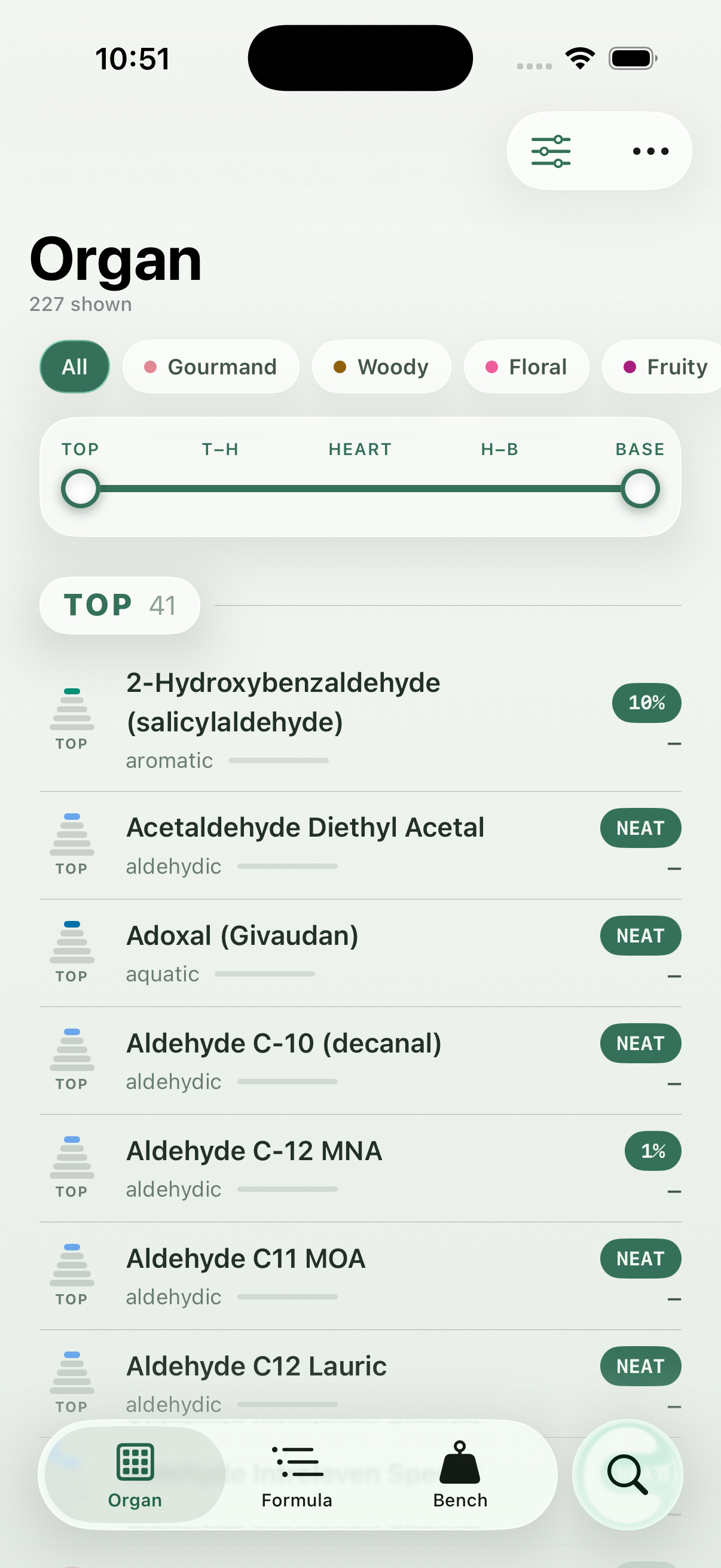
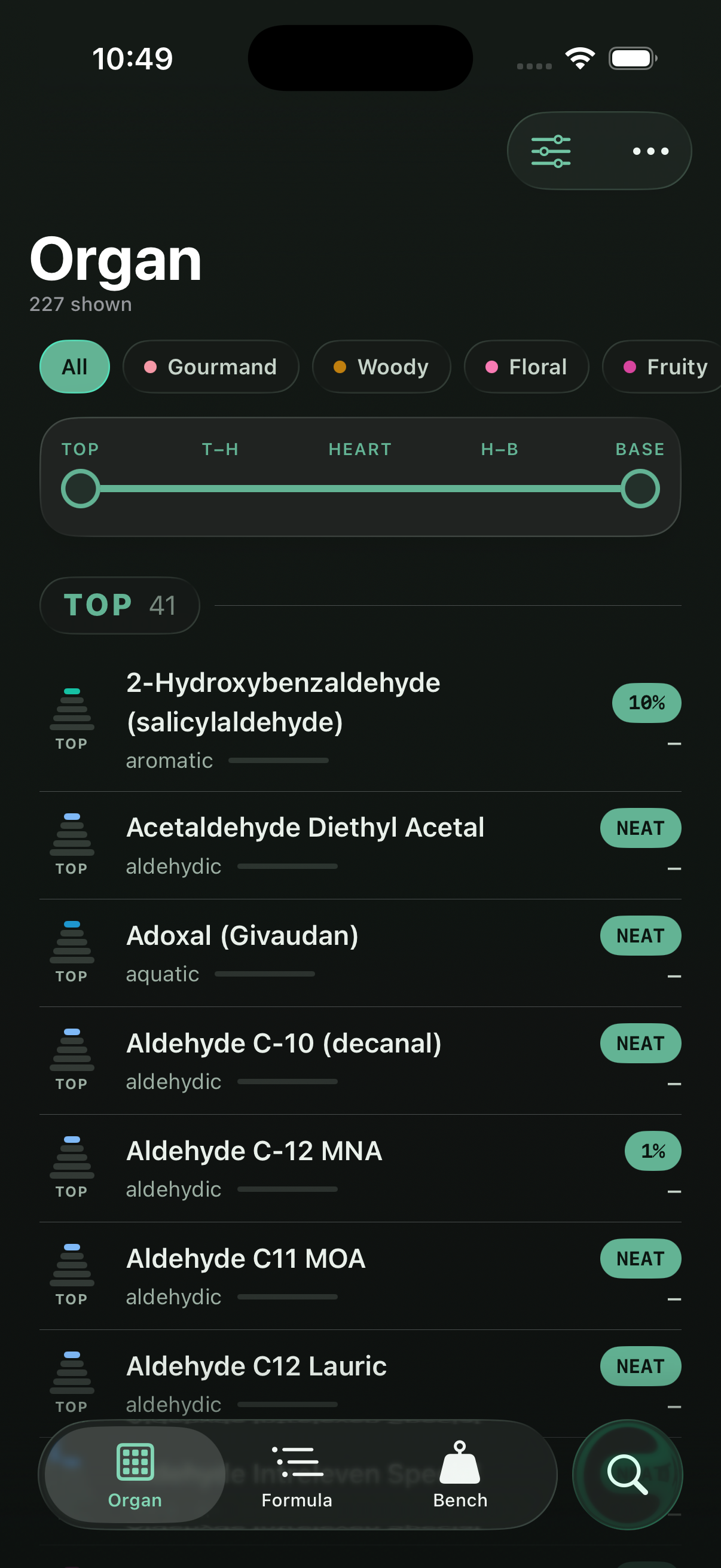
Your organ is the home screen: 227 bottles grouped by position — top, top–heart, heart, heart–base, base — each showing its family, its dilution and how much is left in grams. Essential oils, absolutes and captive aroma chemicals sit side by side, because on a real bench they do too.
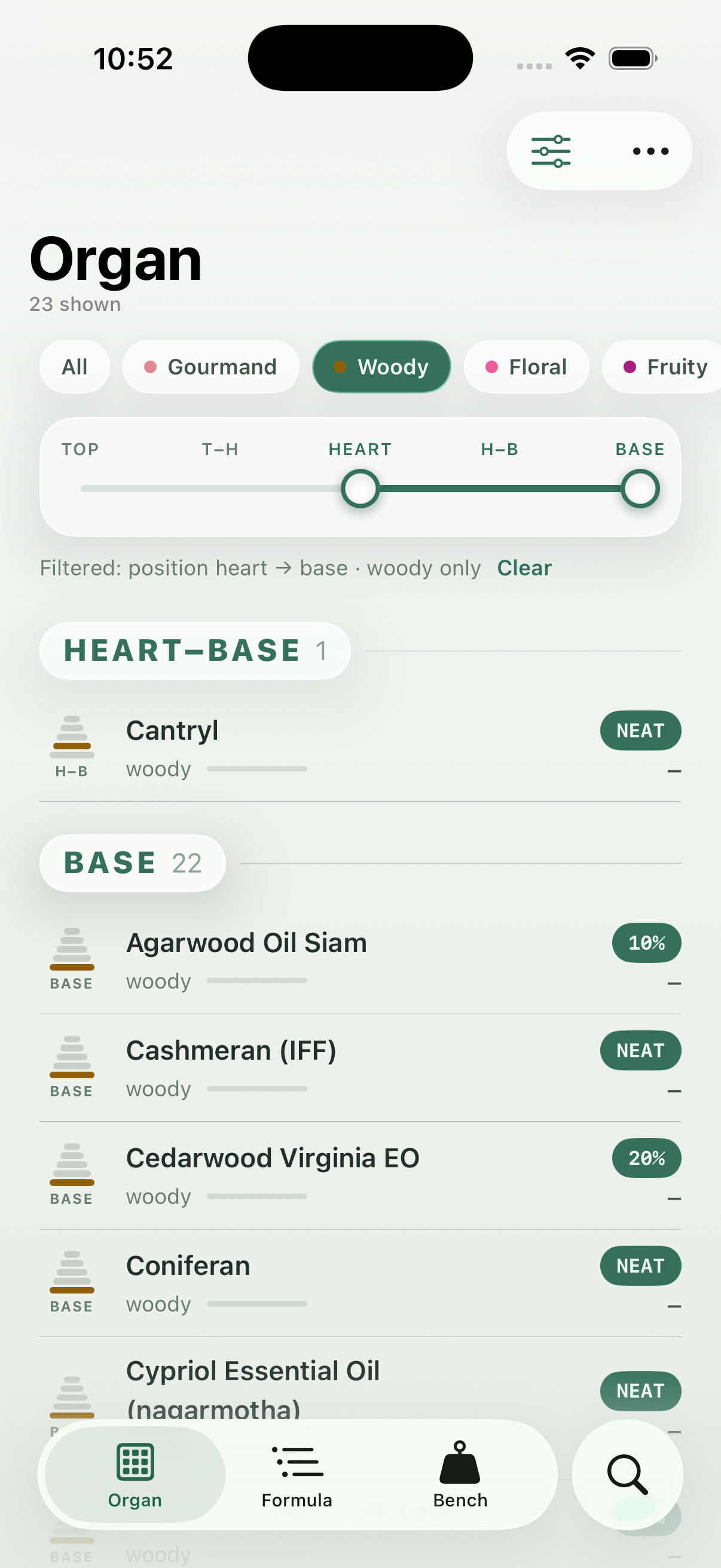
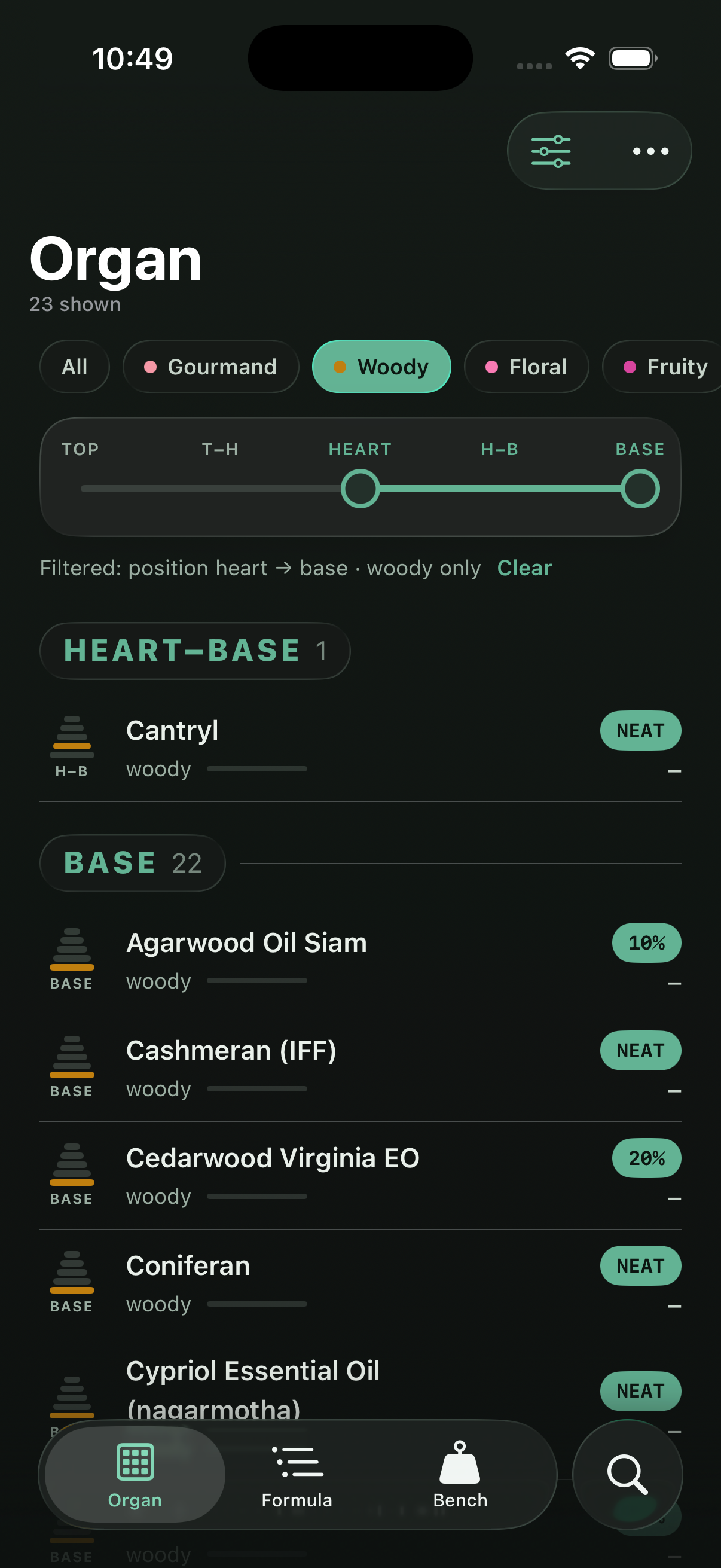
Drag the position rail to narrow the shelf to a stretch of the pyramid, then tap a family to cut it further — woody from heart to base gets you from 227 bottles to 23 without typing anything. Search knows the trade name, the chemical name, the CAS number and the supplier code, so “salicylaldehyde” and “2-hydroxybenzaldehyde” find the same bottle.
Move one number and everything else keeps up
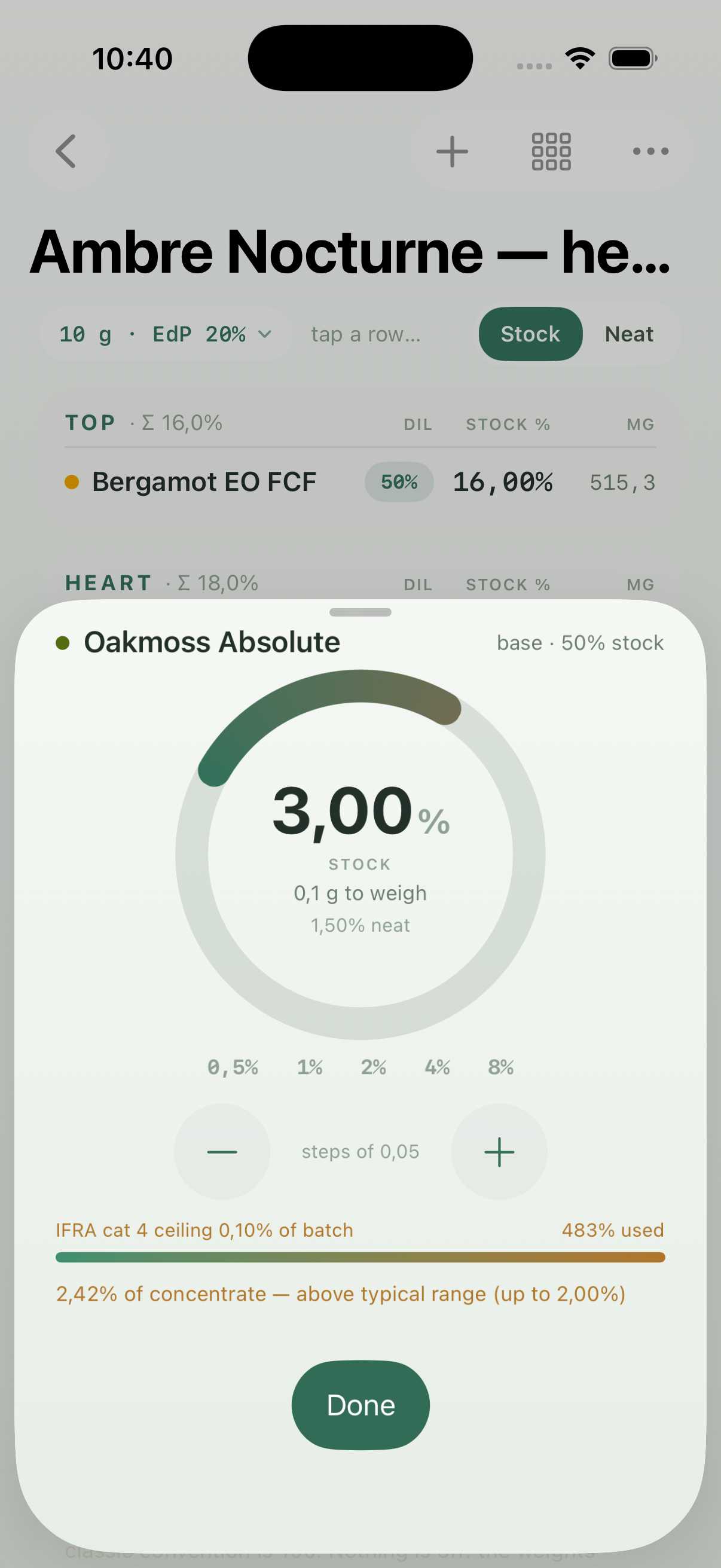
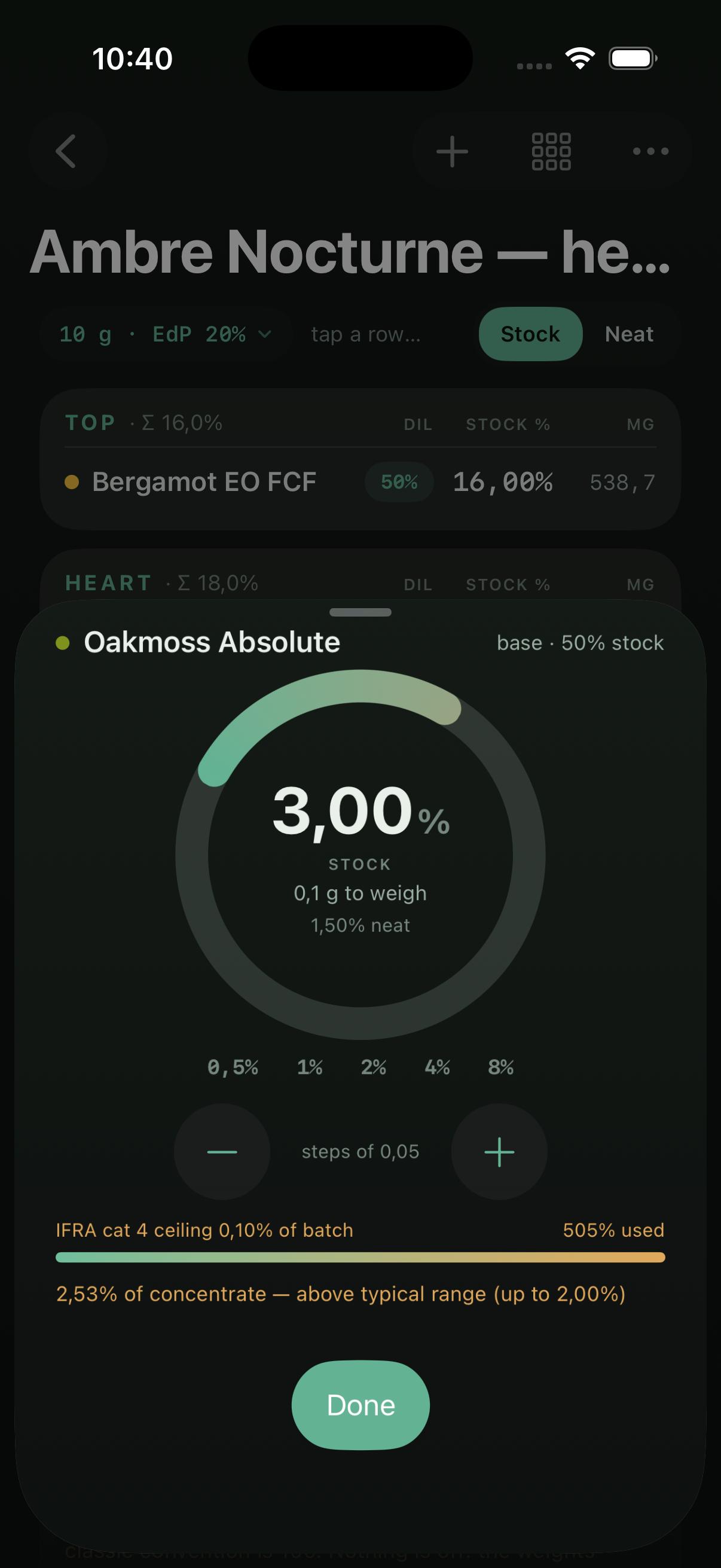
A formula is a table with tier subtotals at the top of each block. Tap a row and the dial opens: set the percentage in steps of 0,05, or jump to 0,5 / 1 / 2 / 4 / 8%. Scentigram shows the same figure three ways — as stock, as neat, and as milligrams on the scale for the batch size you chose — and rewrites the ethanol top-up as you go.
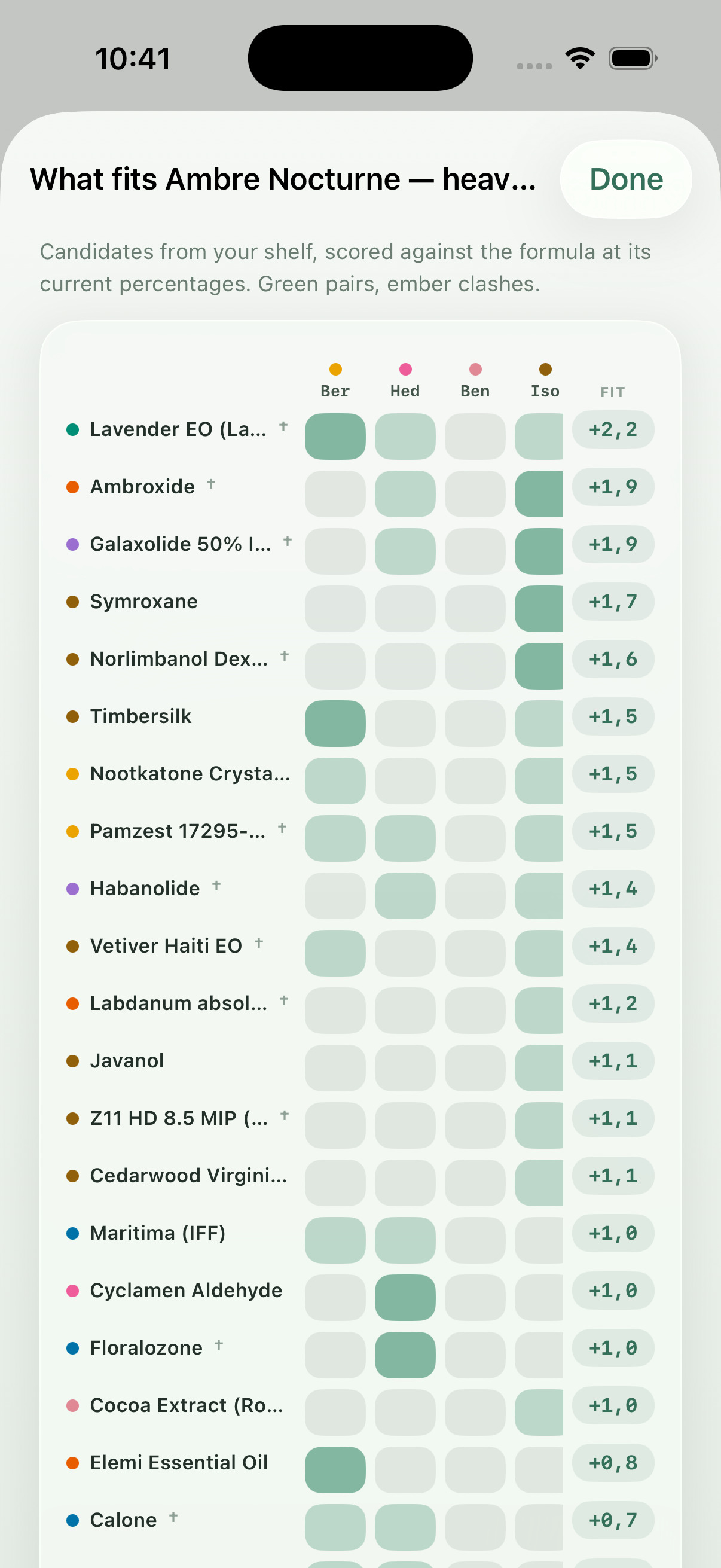
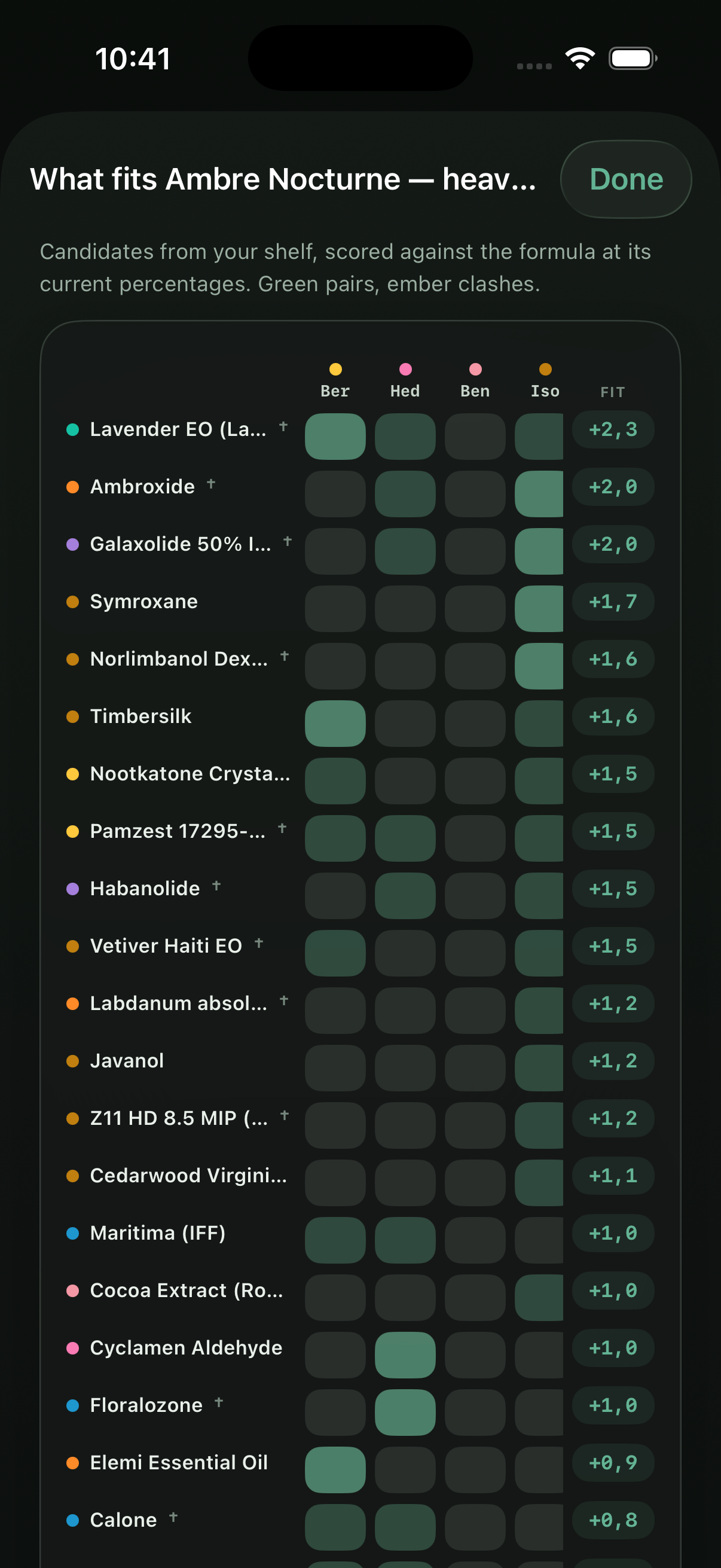
Under the dial sits the honest part: the IFRA category ceiling for this material, how much of it you've used, and a plain-language note when you're over the typical range. Ask what fits and you get 41 candidates from your own shelf, scored against the formula at its current percentages — green pairs, ember clashes, one column per material already in the bottle.
One material at a time, in the order you'd pour them
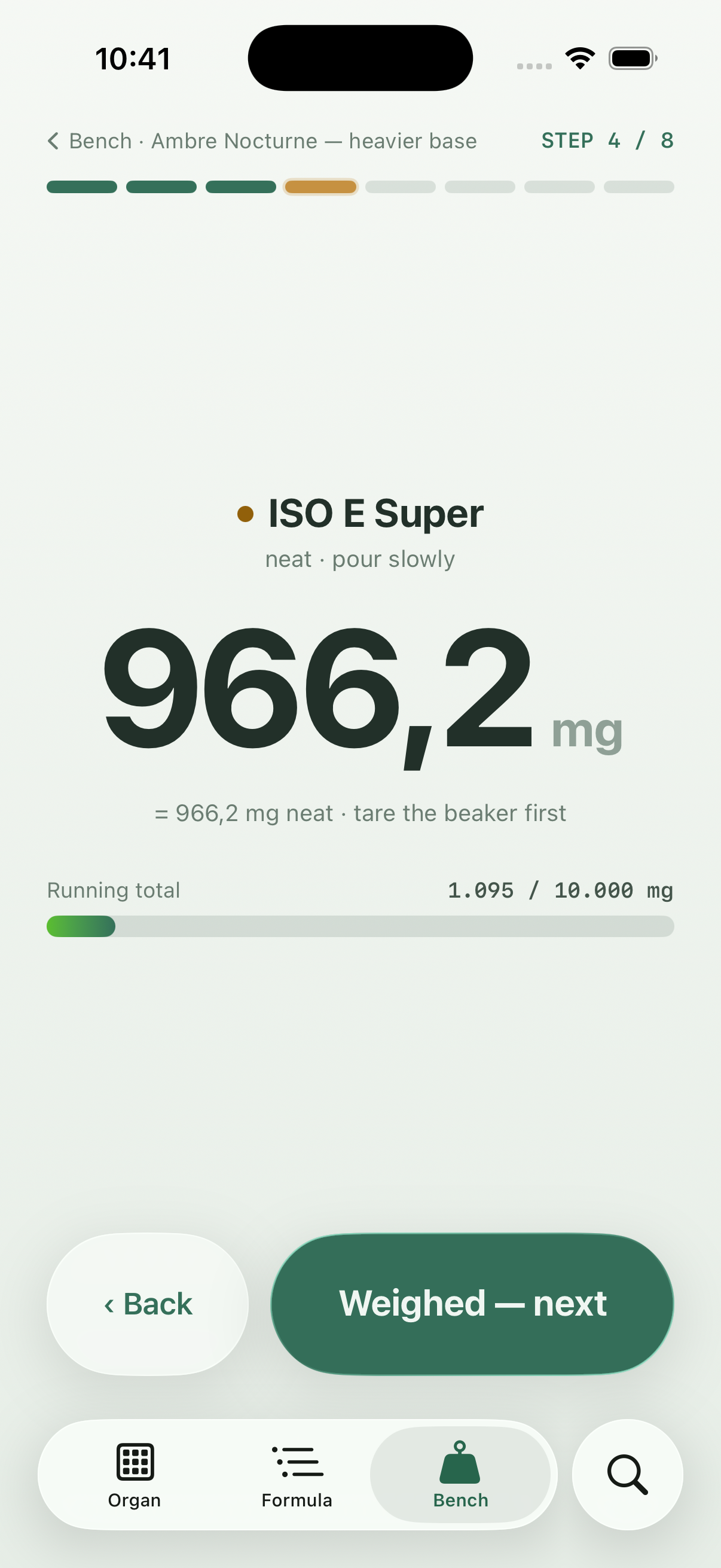
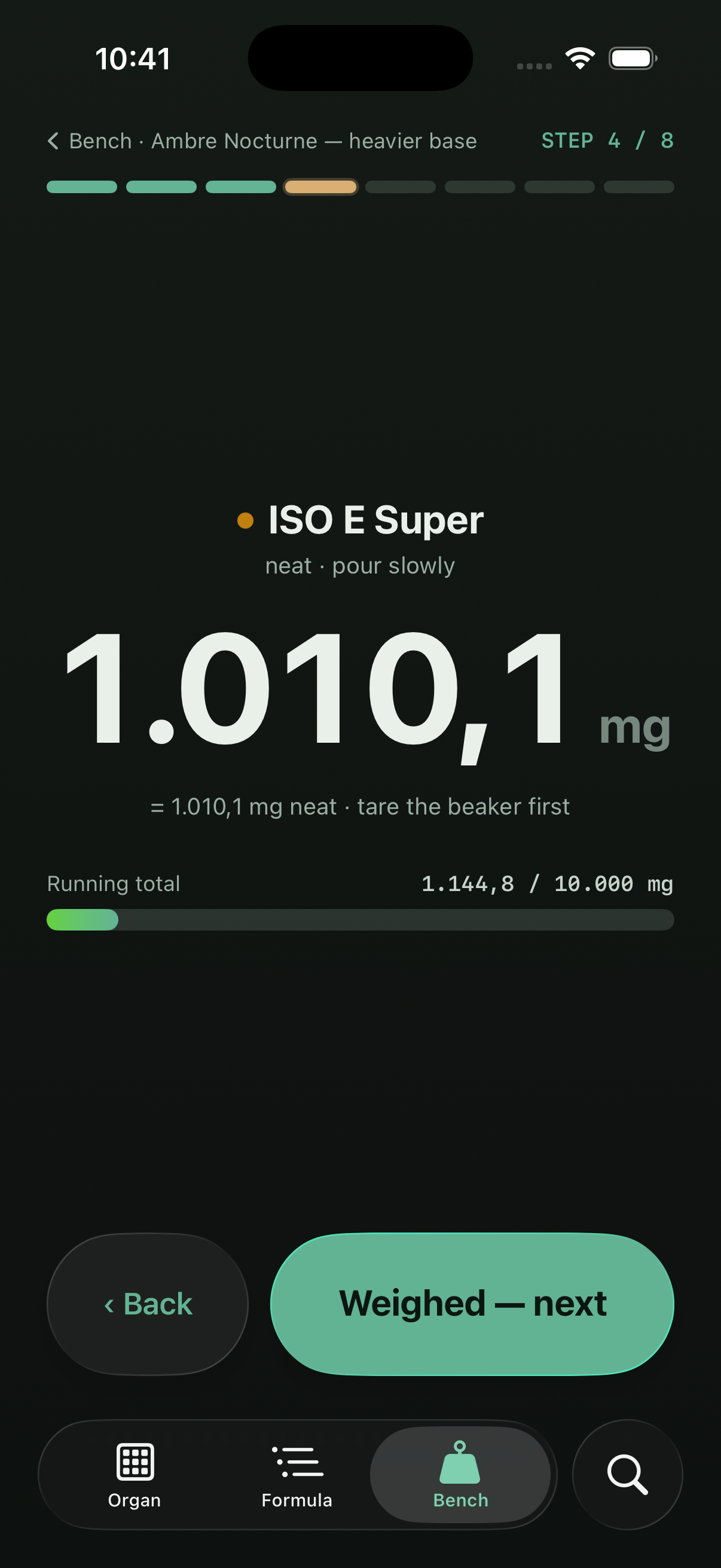
Start a batch and the bench takes over: base first, then heart, then top, each step showing the one bottle to pick up and the milligrams to put on the scale. Progress pips across the top tell you how many steps are left. Ethanol goes in last, to the milligram, once the concentrate is done.
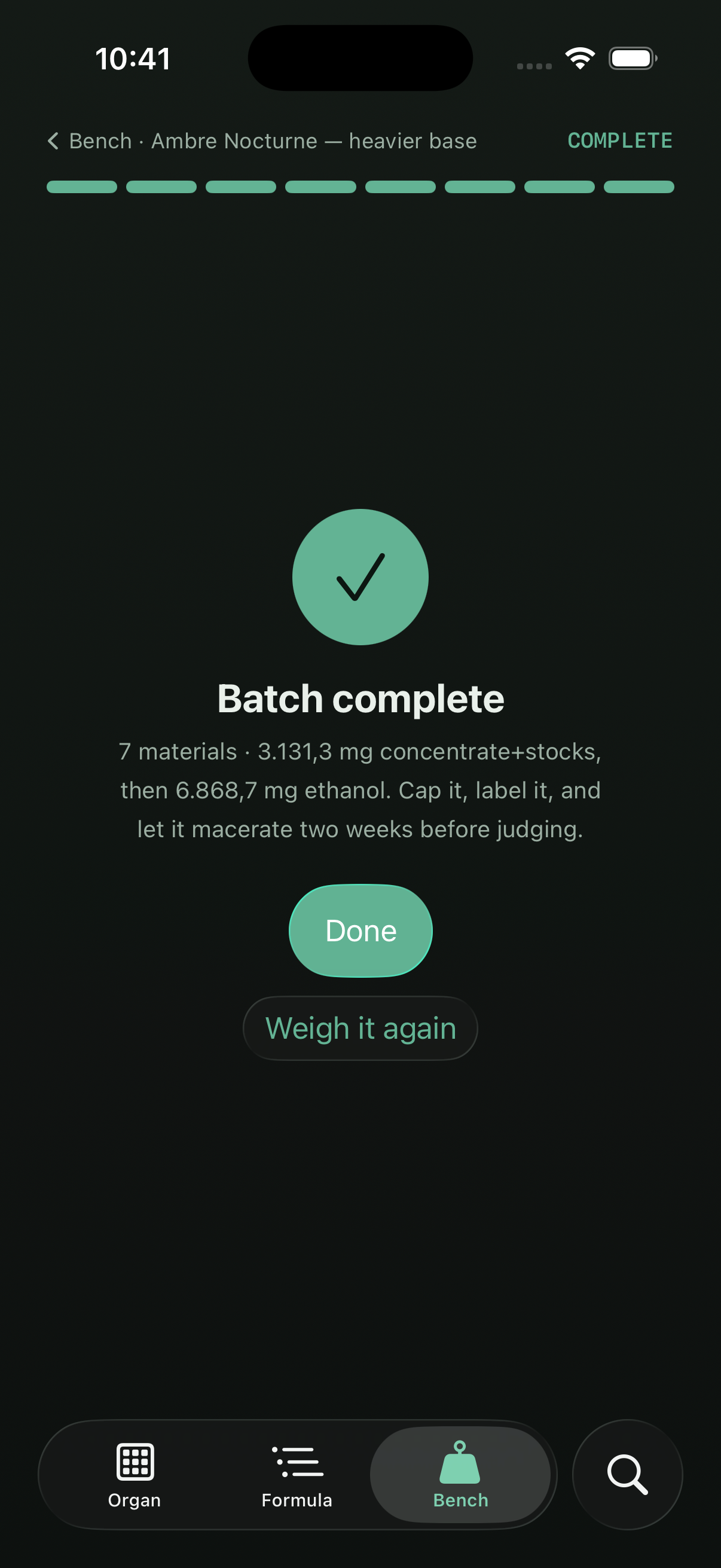
At the end you get the receipt — 7 materials, 2 995,2 mg of concentrate and stocks, then 7 004,8 mg of ethanol — plus the reminder every hobbyist forgets: cap it, label it, and let it macerate two weeks before you judge it. Weigh it again next month and the same batch is one tap away.
Open your spreadsheet once more, then never again
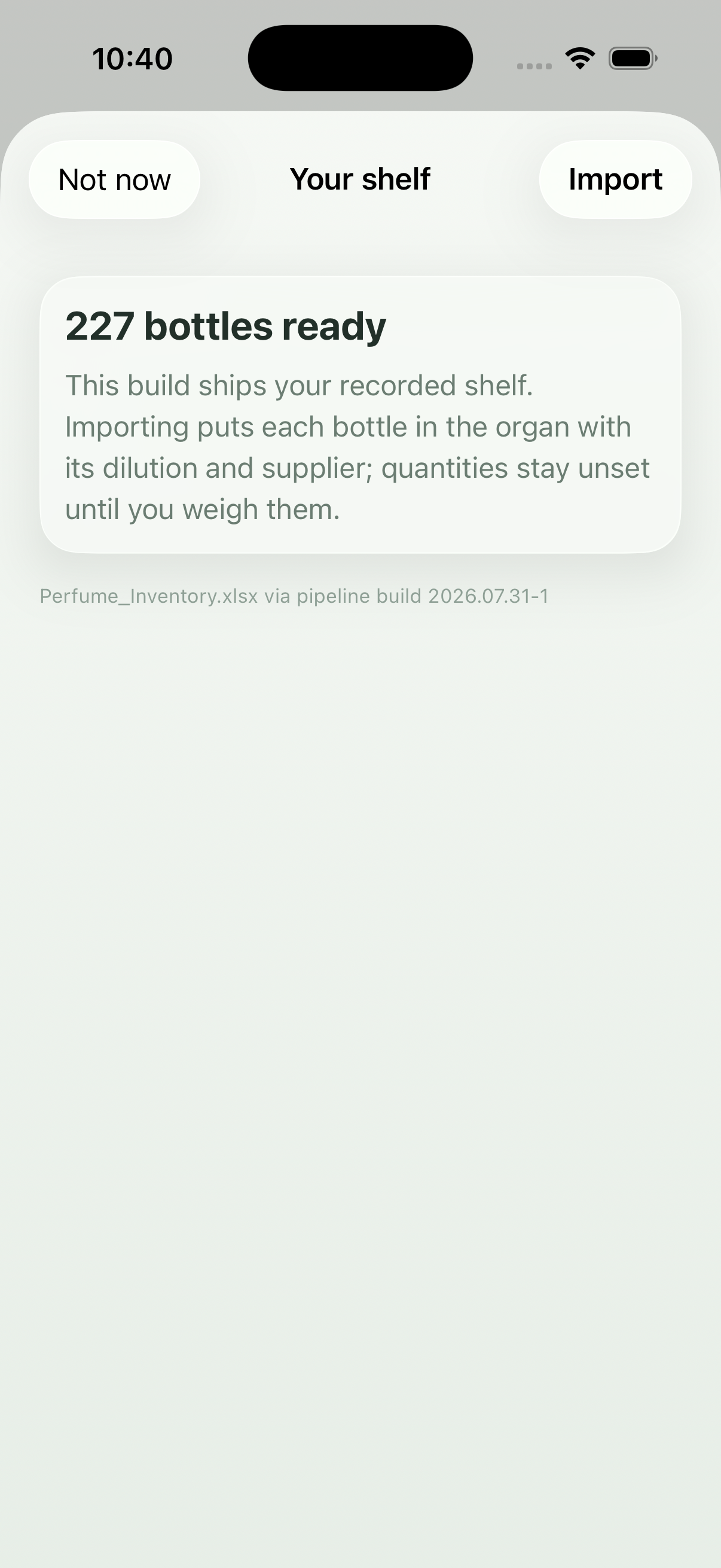
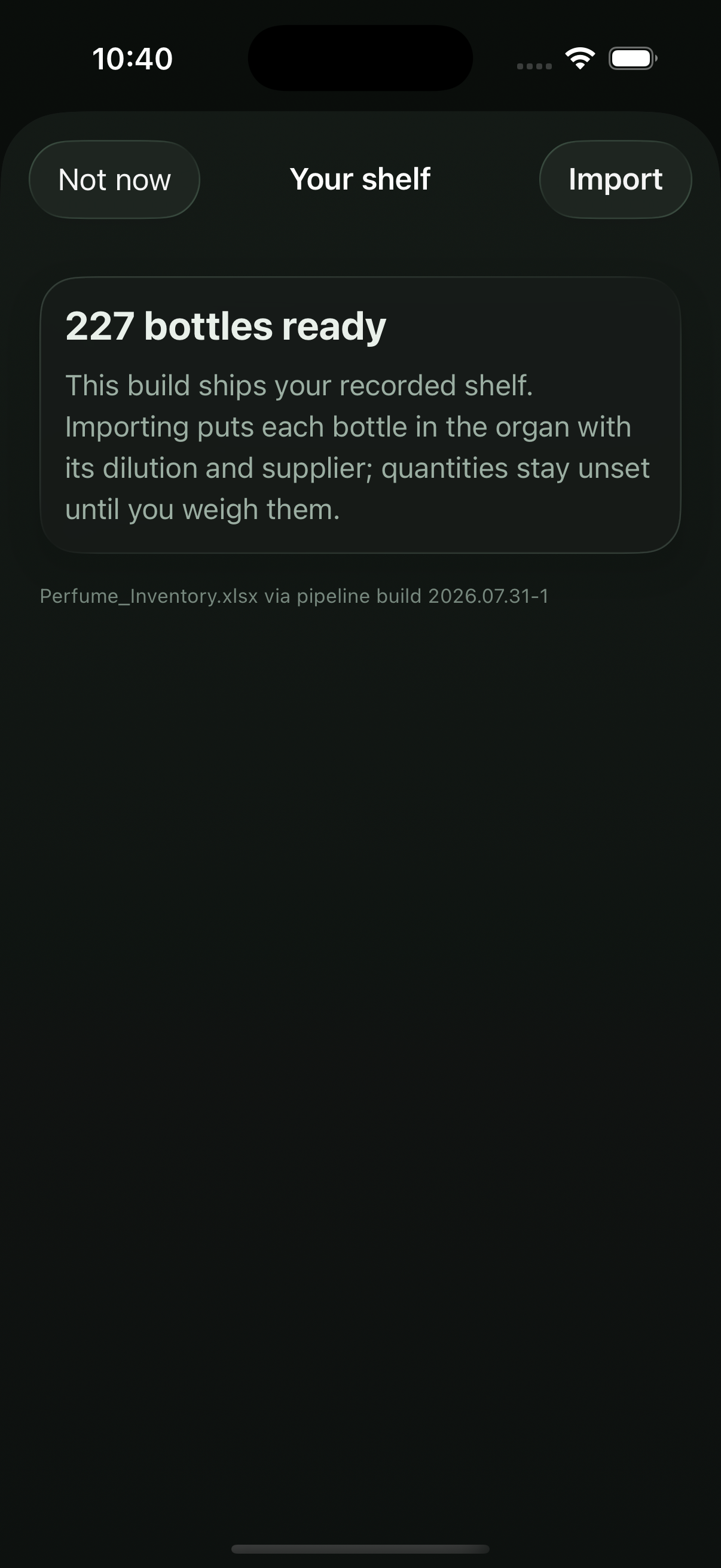
Point Scentigram at the inventory you already keep and it lands each bottle in the organ with its dilution and supplier intact. Quantities stay unset until you weigh something, so nothing is invented on your behalf — 227 bottles ready before you've made a single decision.
Nothing leaves the phone. There's no account, no shared library, no feed of other people's formulas — your shelf is yours, and the app is a tool rather than a place to hang around in.
Fit is a nudge, not a grade. Nothing is rated out of ten and no formula is ever called good or bad — that's your nose's job.
IFRA ceilings are shown because they're useful at home, not to certify anything. You're told where you stand and left to decide.
No streaks, no reminders to log things, no dashboard. Open it when you're making something; close it when you're done.
“It gets out of my way before the idea does. I've made more in two months than in the previous two years.”
— a hobbyist, three batches deep this monthEvery spark deserves somewhere to go.
Scentigram is in the works — come see where it's headed.